If you’ve ever stood over a houseplant wondering “should I water this today or not?” — you’re not alone. Watering is the single most common thing beginners get wrong with indoor plants, and it’s the reason more houseplants die from too much care than too little. The good news is that once you understand a few simple signals your plant gives you, you’ll never have to guess again.
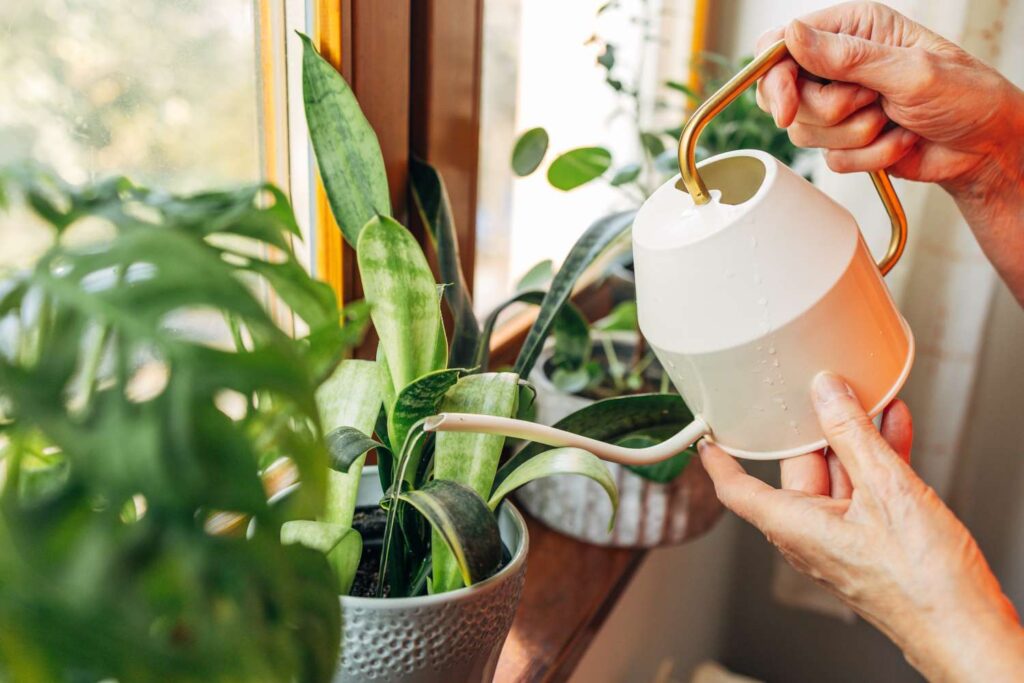
This guide walks you through exactly how to water indoor plants — from the simple test you can do with your finger, to how the Indian climate changes your watering routine across the year, to the specific habits of common houseplants.
How Do You Know When to Water an Indoor Plant?
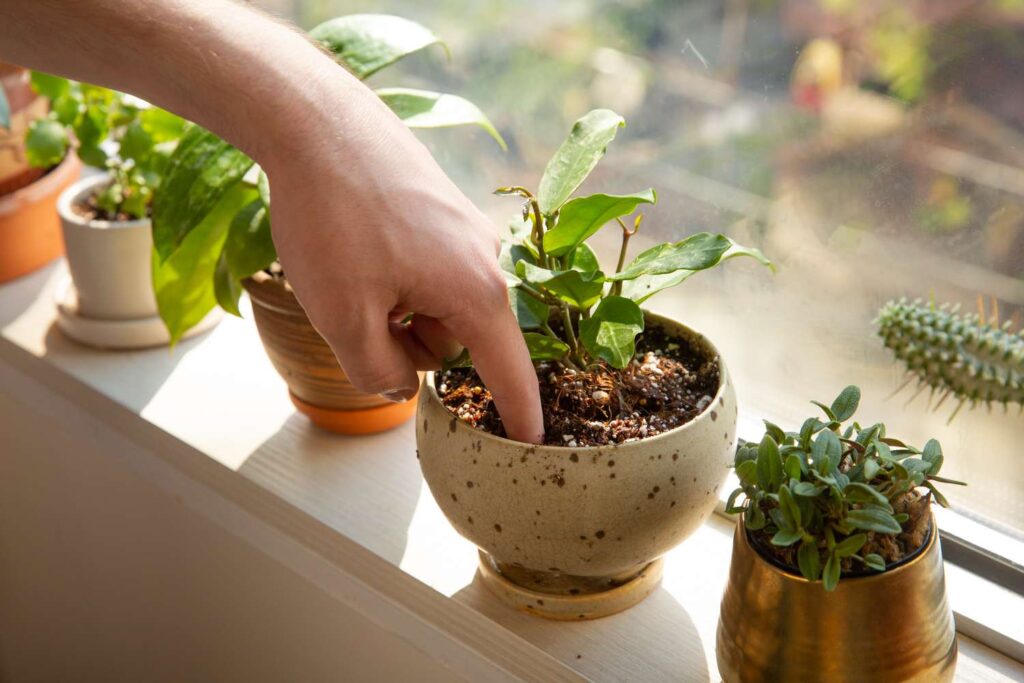
The simplest, most reliable way to know if your indoor plant needs water is the finger test: push your finger about 1–2 inches into the soil. If it feels dry at that depth, it’s time to water. If it still feels cool or damp, wait a few more days and check again. This single habit prevents the two most common houseplant killers — overwatering and underwatering — better than any fixed weekly schedule ever could.
Why “Water Once a Week” Doesn’t Actually Work
A lot of beginner advice online tells you how to water indoor plants on a fixed schedule — once a week, twice a week, and so on. The problem is that how often a plant needs water depends on several things happening at once:
- Plant type — a succulent and a peace lily have completely different water needs
- Pot material — terracotta pots dry out faster than plastic or ceramic ones
- Season — hot, dry summers dry out soil much faster than humid monsoon months
- Light and airflow — a plant near a sunny window dries out faster than one in a dim corner
- Pot size — smaller pots hold less soil, so they dry out quicker than large ones
Because of all these variables, a fixed schedule is really just a guess. Checking the soil directly — instead of the calendar — is what actually works.
Signs Your Plant Needs Water
Beyond the finger test, your plant usually gives you a few visible clues when it’s thirsty and to know how to water indoor plants:
- Drooping or slightly wilted leaves that perk back up shortly after watering
- Dry, crispy leaf edges or tips
- Soil that has pulled away from the sides of the pot
- The pot feels noticeably lighter than usual when you lift it
If you notice one or two of these signs along with dry soil from the finger test, it’s a good time to water.
Signs You’re Overwatering (Just as Important to Know)
Overwatering is actually more common — and more damaging — than underwatering, because it can lead to root rot, which is much harder to reverse than simply drying out. Watch for:
- Yellowing leaves, especially lower/older ones
- Soft, mushy stems at the base of the plant
- Soil that stays wet for many days after watering
- A musty smell coming from the pot
- Tiny flying insects (fungus gnats) hovering near the soil
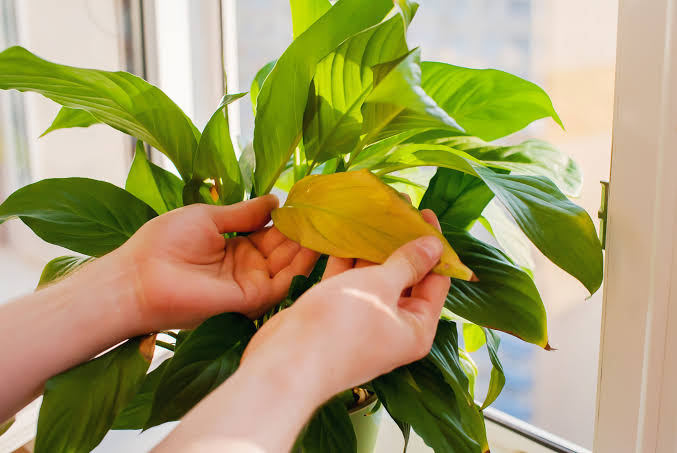
If you spot these signs, hold off on watering completely and let the soil dry out fully before checking again. In some cases, you may need to check the roots and trim away any soft, blackened, or mushy sections. This is the main reason where you need to clearly understand how to water indoor plants.
How to water indoor plants by Season in India
India’s climate swings dramatically across the year, and your watering routine should shift along with it. It is very important to know how to water indoor plants according to the climatic conditions:
- Summer (hot & dry): Soil dries out much faster. You may need to water more frequently — sometimes every 2–3 days for smaller pots — and check more often than usual.
- Monsoon (humid): Soil stays moist for longer due to high humidity, so you’ll likely water less often. Be extra cautious of overwatering during this period, and make sure pots have good drainage so excess moisture doesn’t sit at the roots.
- Winter (cooler, lower light): Most indoor plants slow their growth in winter and need noticeably less water. Cut back your watering frequency and always check the soil before adding more.
Rather than watering on autopilot, get into the habit of checking your plants a little more closely whenever the season changes.
Watering and Your Pot Choice
The type of pot your plant lives in has a direct effect on how often it needs water:
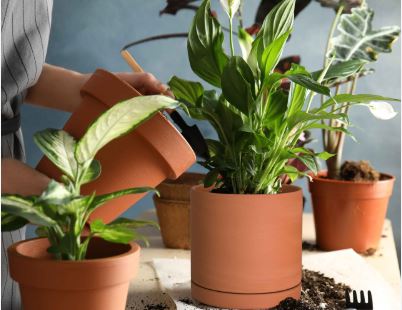
- Terracotta pots are porous and let moisture evaporate faster — great for plants that like to dry out between waterings, but they need more frequent watering.
- Plastic pots retain moisture longer, which is helpful in hot climates but riskier for overwatering-prone plants.
- Ceramic pots (glazed) behave similarly to plastic — they hold moisture longer than terracotta.
Whatever pot you choose, make sure it has proper drainage holes. Without them, excess water has nowhere to go and will sit at the roots, leading to root rot even if you’re otherwise watering correctly. If you’re still deciding on the right pots for your plants, our guide to choosing the right planters for your home covers this in detail
Quick-Reference: General Watering Habits by Plant Type
These are general starting points to know how to water indoor plants — always confirm with the finger test rather than following any schedule blindly:
| Plant | General Watering Habit |
| Snake Plant | Infrequent — allow soil to dry out fully between waterings |
| ZZ Plant | Infrequent — very drought-tolerant |
| Money Plant | Moderate — water when top inch of soil is dry |
| Peace Lily | More frequent — likes consistently moist (not soggy) soil |
| Succulents & Cacti | Rare — water deeply, then let soil dry out completely |
| Spider Plant | Moderate — water when soil surface feels dry |
Common Watering Mistakes Beginners Make
- Watering on a fixed schedule instead of checking the soil first
- Using a pot with no drainage hole, trapping excess water at the roots
- Watering a little bit every day instead of watering thoroughly and less often
- Ignoring seasonal changes and watering the same amount year-round
- Assuming all plants have the same needs — a succulent and a peace lily should never be watered the same way
A Simple Watering Routine to Follow
- Check the soil with the finger test every 2–3 days (more often in summer, less in monsoon/winter).
- Water only when the soil feels dry at 1–2 inches deep.
- Water thoroughly until it drains from the bottom of the pot — then stop.
- Empty any water that collects in the saucer underneath so roots aren’t sitting in standing water.
- Adjust your checking frequency as the season changes.
Final Thoughts
Watering indoor plants isn’t about memorising a perfect schedule — it’s about learning how to water indoor plants by reading what your specific plant, in your specific pot, in your specific home, is telling you. Once the finger test becomes a habit, you’ll find yourself worrying a lot less and enjoying your plants a lot more.
Now that you know when to water and how to water indoor plants, the container your plant lives in matters just as much as your watering routine — check out our guide to choosing the right pots and planters for your home next. And if you’re growing plants on a balcony or rooftop, our terrace gardening guide for beginners covers how outdoor conditions change your watering needs even further.
You can also check the link for – How Often Should You Water Indoor Plants? A Beginner’s Guide
Recommended to Purchase:
Watering cans with narrow spouts
“Join Green Sphere Foundation in building greener spaces.”